

Many marketers post consistently but still see flat results. In most cases, the difference comes down to one thing: how well you understand your analytics.
In this guide, this post will explain the most important Instagram metrics, how to analyze performance effectively, and how to turn insights into a stronger content strategy.
Instagram KPIs
KPIs (Key Performance Indicators) are metrics used to measure the achievement of specific goals. Specifically, they serve as benchmarks for evaluating the performance of campaigns and content.
Common KPIs Used in Instagram Marketing
Since marketing objectives vary, the most relevant KPIs also differ. As a result, it is important to select and monitor the appropriate metrics based on your goals.
| Marketing Goal | Relevant KPI |
|---|---|
|
Brand Awareness |
Reach, Impressions, Brand Mentions |
|
Engagement |
Likes, Comments, Shares, Saves |
|
Community Growth |
Follower Growth, Profile Visits, Audience Growth Rate |
|
Conversion |
Website Clicks, Conversion Rate, Purchases, Leads |
To better understand these differences, let’s take a closer look at each KPI in detail.
1. Brand Awareness KPIs
Reach: The number of unique users who saw your content.
Impressions: The total number of times your content was displayed or viewed.
Brand Mentions: The number of times users mention or tag your brand on Instagram.
For example, businesses usually focus on these KPIs when launching a new product, entering a new market, or trying to make more people recognize their brand. In this case, reach shows how many people discovered the brand, impressions indicate how frequently users were exposed to the content, and brand mentions reflect organic awareness among audiences. In other words, these metrics help brands understand whether their content is reaching new audiences and increasing recognition.
2. Engagement KPIs
Likes: The number of users who react positively to your content.
Comments: The number of responses and discussions generated by your content.
Shares: The number of times users share your content with others.
Saves: The number of users who save your content.
Overall, engagement metrics show how actively audiences interact with your brand. Additionally, companies track these KPIs when they want to build stronger relationships with customers and understand what type of content resonates with their audience. “In particular, saves and shares often indicate stronger interest because users choose to keep or recommend valuable content. For this reason, engagement metrics are especially useful when optimizing content strategies and improving audience interaction.
3. Community Growth KPIs
Follower Growth: The increase or decrease in the number of followers over time.
Profile Visits: The number of users who visit your Instagram profile after viewing your content.
Audience Growth Rate: The percentage change in your audience size over a specific period.
Furthermore, these metrics help companies understand whether their content is attracting and building a long-term audience. Businesses focus on community growth when they want to create loyal followers, strengthen customer relationships, and increase future opportunities for engagement and sales.
4. Conversion KPIs
Website Clicks: The number of users who click links from Instagram content or profiles.
Conversion Rate: The percentage of users who complete a desired action after interacting with your content, such as making a purchase or signing up.
Purchases: The number of completed transactions generated through Instagram.
Leads: The number of potential customers who provide information or show interest in a product or service.
Therefore, conversion metrics help companies measure whether Instagram marketing contributes to actual business results. In particular, these KPIs are especially important for companies that aim to generate sales, collect customer information, or drive users to external platforms.
How to Track and Analyze Instagram Metrics
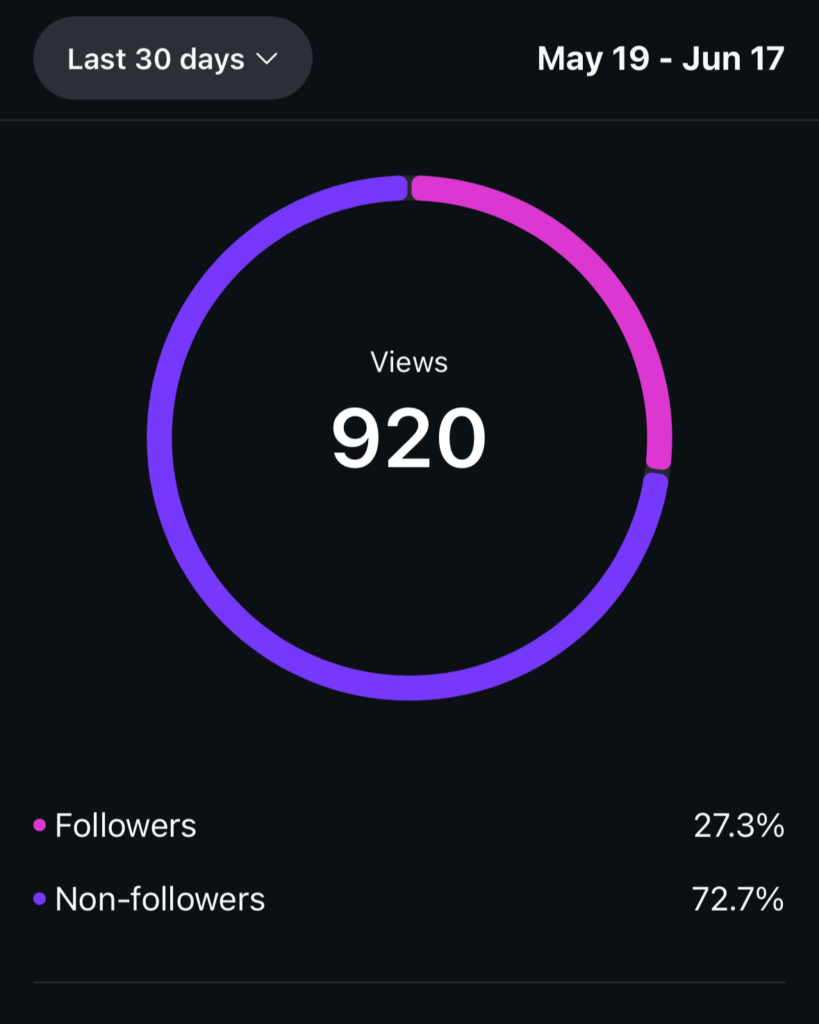
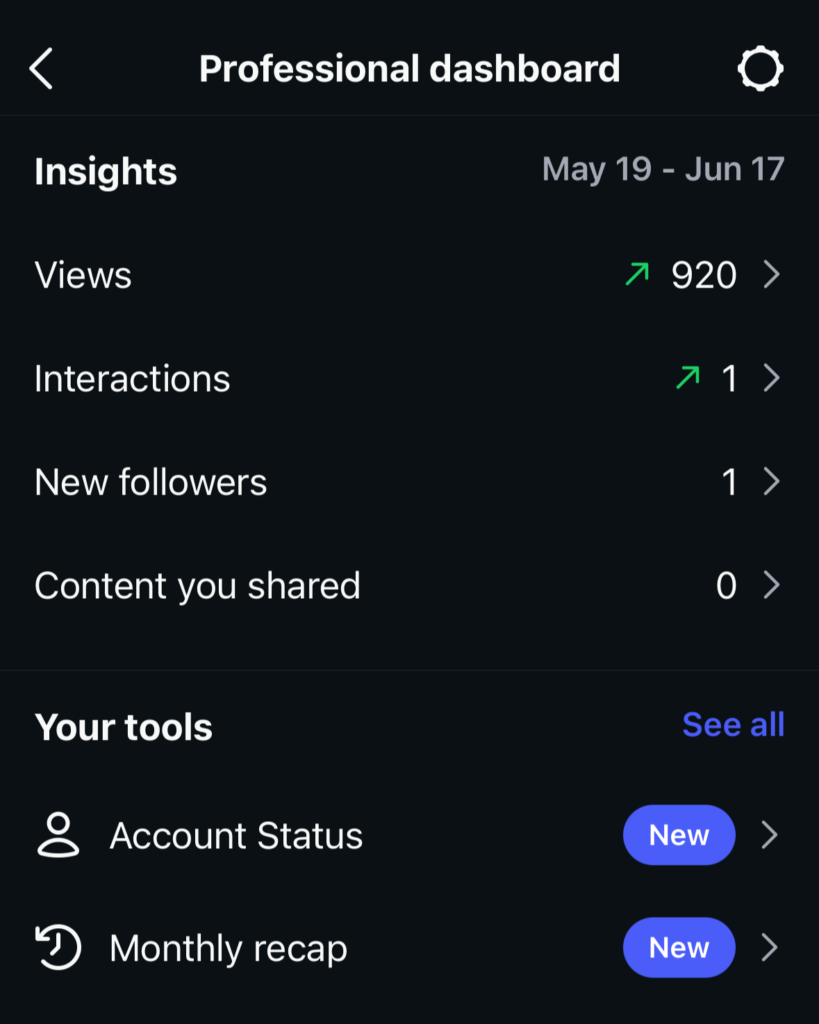
To begin with, Instagram Insights allows marketers to track various performance metrics directly within the Instagram app or through Meta Business Suite. As a result, by analyzing these data, marketers can understand how their content is performing and identify areas for improvement.
1. Using Instagram Insights
Marketers should review Insights regularly rather than only checking performance after major campaigns. For this reason, many companies analyze their Instagram data on a daily, weekly, monthly, or campaign basis to track trends, measure progress, and make data-driven decisions.
2. Tracking Metrics by Content Type
Different Instagram content formats often serve different marketing purposes,. Therefore, performance should be analyzed separately for each format. Rather than comparing all content equally, marketers should evaluate which formats are most effective for achieving specific goals.
Reels
Purpose: Increase brand exposure and reach new audiences.
Key metrics: Reach, Impressions, Views, Watch Time
Reels are often recommended to users beyond existing followers, making them effective for content discovery and brand awareness. If you are interested in reels, read our guide on Instagram Reels Strategy.
Carousel Posts
Purpose: Share detailed information and encourage deeper audience interaction.
Key metrics: Saves, Shares, Engagement Rate
Carousels allow users to swipe through multiple slides, making them effective for tutorials, educational content, product guides, and storytelling.
Static Images
Purpose: Maintain brand identity and communicate key messages.
Key metrics: Likes, Comments, Engagement Rate
Static posts are useful for announcements, product showcases, and visual branding, although they may generate less reach compared to Reels.
Stories
Purpose: Build relationships and encourage direct interaction with followers.
Key metrics: Story Views, Replies, Sticker Interactions, Link Clicks
Stories provide a more casual and frequent way to communicate with audiences through features like polls, questions, and links.
3. Identifying Top-Performing Content and Audience Insights
After analyzing performance by content type, marketers should identify which content consistently generates the best results and understand audience behavior patterns.
For example, marketers can ask questions such as:
- Which topics generate the highest engagement?
- Which content formats receive the most saves and shares?
- Which posts attract new followers?
- When is the audience most active?
- What types of content do followers interact with the most?
By comparing these insights over time, marketers can identify successful patterns and avoid relying on assumptions when planning future content.
4. Creating a Performance Dashboard
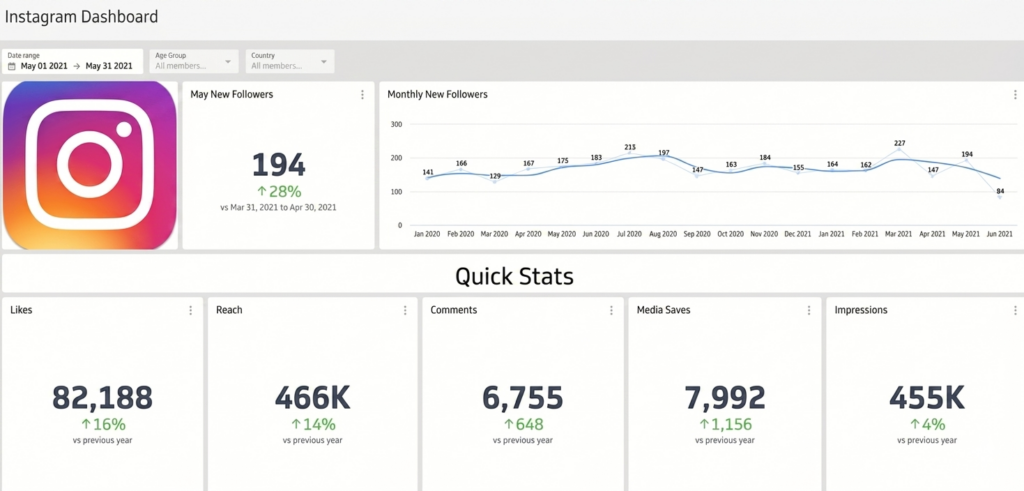
Once performance data is collected, marketers can organize key metrics into a performance dashboard to monitor trends and compare results over time.
Depending on the company’s workflow and team structure, marketers may use different tools such as Notion, Google Sheets, or other analytics platforms to record and manage performance data.
Turning Insights Into Actionable Strategy
Collecting data is only the first step. However, the real value of Instagram analytics comes from using that data to make smarter content decisions.
1. Double Down on High-Performing Content
When a piece of content consistently outperforms your average, that is a signal worth paying attention to.
For example, if educational carousel posts regularly generate saves and shares that are two to three times higher than your typical posts, this suggests your audience finds that format genuinely useful. In that case, consider:
- Expanding the topic into a content series
- Applying the same format to related subjects
- Reposting or refreshing top-performing content for new audiences
In other words, the goal is not to repeat the same content, but to understand why it worked.
2. Diagnose and Improve Underperforming Content
Before abandoning content that did not perform well, use your metrics to identify where it fell short.
| Weak Metric | Possible Issue | What to Adjust |
|---|---|---|
|
Low Reach |
Poor timing or discoverability |
Posting time, hashtags, or format |
|
Low Engagement |
Weak hook or unclear message |
Caption, opening line, or visual |
|
Low Saves/Shares |
Content lacks practical value |
Add tips, frameworks, or takeaways |
|
Low Watch Time (Reels) |
Audience drops off early |
Shorten intro, improve pacing |
However, not every post needs to be scrapped. In fact, small adjustments based on data often lead to stronger results than starting from scratch.
3. Align Posting Strategy With Audience Behavior
Analyzing audience behavior helps marketers optimize when and how they publish content. Instead of posting based on assumptions, companies can use audience data to make more effective content decisions.
Therefore, marketers can adjust their strategy by considering:
- Posting timing: Publish content when followers are most active to increase the chances of visibility and engagement.
- Audience demographics: If certain groups respond better to specific topics or styles, marketers can adjust the content tone, messaging, and themes to better match their interests.
- Content performance patterns: If follower growth or engagement increases after a specific content format, marketers can prioritize similar formats in future campaigns.
4. Build a Continuous Optimization Cycle
Over time, Instagram strategy improves over time when analytics are treated as an ongoing process rather than a one-time review.
To maintain long-term growth, brands can follow a continuous optimization cycle:
- Publish content based on your current strategy
- Measure performance using relevant KPIs
- Analyze what worked and what did not
- Identify patterns across content types and topics
- Adjust your approach based on those insights
- Repeat with the updated strategy
These decisions should be part of a broader Instagram content system rather than isolated improvements for individual posts. If you want to learn how to build a complete framework, check out my Instagram Marketing Strategy.
Conclusion

Ultimately, instagram analytics transforms content creation from guesswork into a data-driven process. Specifically, by tracking the right KPIs, analyzing performance trends, and applying insights strategically, marketers can improve engagement, increase reach, and achieve more sustainable growth.
Rather than focusing on vanity metrics alone, successful marketers continuously evaluate content performance and refine their strategies based on evidence.